


Registration
Eligibility
GMAT exam eligibility is set by the Graduate Management Admission Council (GMAC) with very few restrictions. There is no fixed educational qualification, stream, or nationality requirement to take the exam. Candidates from any background can apply. Work experience is not required to register, though many business schools may prefer it later. The GMAT exam is conducted only in English. Indian candidates must carry a valid passport as ID on the test day.
The minimum age to register for the GMAT is 18 years. Candidates aged 13-17 years need parental consent. There is no upper age limit. A candidate can take the exam up to 5 times in a 12-month period, with a gap of at least 16 days between attempts. GMAC does not set a strict lifetime limit. However, colleges may have their own eligibility rules for admission.
GMAT Exam Eligibility 2026
GMAC has kept the GMAT eligibility requirements flexible to ensure wide accessibility. As of 2026, the GMAT eligibility criteria remain consistent with previous years, designed to accommodate a diverse, global pool of applicants.
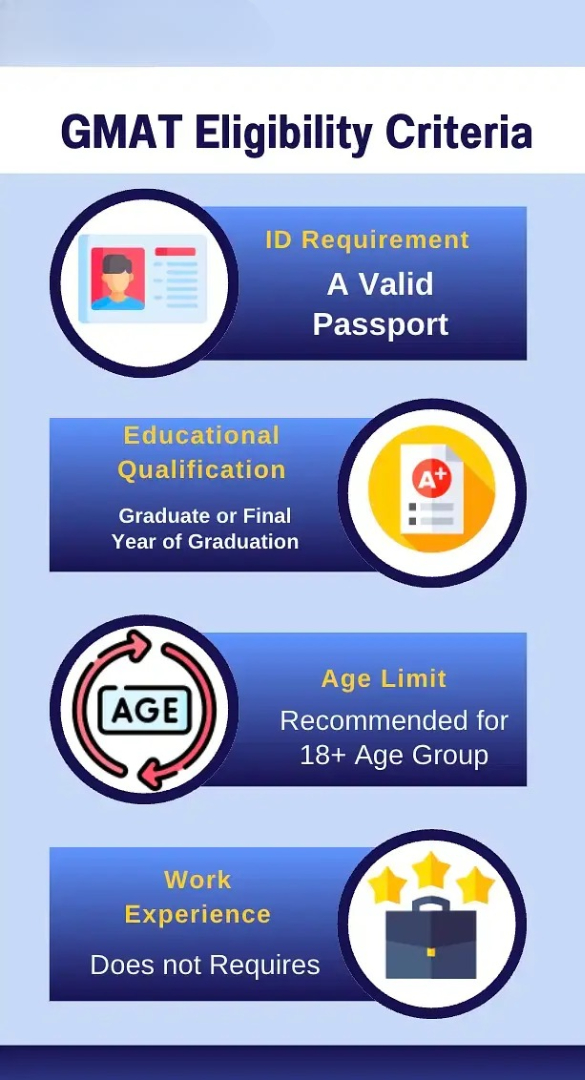
Here's a detailed look at the core criteria:
Age Limit
Minimum Age: 18 years
Candidates aged 13 to 17 may take the GMAT with written consent from a parent or legal guardian. The Parental Consent FormPDF provided by GMAC must be filled out, signed, and emailed to GMATParentalConsent@Pearson.com before registration
No upper age limit is specified. Candidates of any age may take the exam, provided other requirements are met.
Note: While age is not a barrier, most GMAT test-takers are early- to mid-career professionals or final-year undergraduates.
Educational Qualifications
No minimum academic qualification is required to take the GMAT.
GMAC does not require a bachelor's degree, but:
Most GMAT test-takers hold or are pursuing an undergraduate degree.
Individual business schools may set their own academic admission standards.
Note: Taking the GMAT without a degree is allowed, but it may limit your admission opportunities depending on the program.
Nationality & Citizenship
The GMAT is available to candidates from all countries, with testing centers and online availability in over 100 countries.
ID requirements may vary by country.
Language Proficiency
The GMAT is administered only in English.
There is no official English language requirement to register, but since the test assesses verbal reasoning and written communication, a strong command of English is crucial for success.
Identification Documents
Indian candidates must present a valid, current passport at the time of the test.
The passport must include:
Full name (matching the GMAT registration exactly)
Date of birth
Recent photograph
Signature
Also Read
Work Experience
GMAT does not require any work experience to be eligible. Whether you are a recent graduate with no job experience or a seasoned professional, you can register for the GMAT.
However, many business schools, especially top MBA programs in India and abroad, value work experience during their admissions process.
1 to 3 years of relevant work experience can strengthen your application.
Some part-time or executive MBA programs require a minimum work experience of 3 to 5 years.
Work experience can sometimes compensate for a lower GMAT score or academic record.
GMAT Attempt Limitations in 2026
If you're planning to take the GMAT in 2026, it's important to know how many times you can appear for the exam. Many students retake the GMAT to improve their score, but there are limits set by GMAC (the official exam body). Here’s everything you need to know about GMAT attempt rules.
How Many Times Can You Take the GMAT in a Year?
You can take the GMAT up to 5 times in a 12-month rolling period. This includes tests taken in the online mode as well as at GMAT test centers.
Tip: GMAC recommends retaking the test only if you believe you can improve your score by at least 30–50 points based on your practice test results and preparation.
Total Number of GMAT Attempts in a Lifetime
No limit on the number of attempts in a lifetime.
Minimum Gap Between Two GMAT Attempts
You must wait at least 16 days before retaking the GMAT.
For example, if your GMAT test date is 1st October, you can book your next attempt after 16th October.
Cancelled Scores Also Count
If you cancel your score, that attempt still counts toward your 5-yearly attempt limit.
So, choose wisely before scheduling multiple tests.
Note: You can cancel your score immediately after finishing the test or within 72 hours online. But doing so doesn’t reset your attempt count.
Check out the table below for a summary of the GMAT retake policy.
Attempt Rule | Limit |
|---|---|
Maximum Attempts in a Year | 5 (3 online-delivered, 2 test center-delivered) |
Lifetime Limit | No limit |
Gap Between Attempts | 16 days |
Cancelled Scores Count? | Yes |
Understanding GMAT Eligibility for MBA Admission in 2026
Taking the GMAT is the first step toward pursuing an MBA, but understanding the eligibility requirements can help you plan your preparation and application effectively.
Here’s what Indian MBA aspirants should keep in mind in 2026:
No strict academic prerequisites to take the GMAT: You don’t need a degree or work experience to register for the exam. This means even fresh graduates can attempt the GMAT.
Work experience enhances your application: Although not required for the GMAT, many MBA programs prefer candidates with some professional experience.
Number of attempts and timing: You can take the GMAT up to 5 times in 12 months, so plan your attempts to align with MBA admissions.
Program-specific eligibility: Remember, individual MBA programs may have their own criteria for admissions beyond GMAT eligibility, including minimum work experience, academic background, or language proficiency.
Every year, more than 2 lakh people take the GMAT worldwide. Knowing the 2026 eligibility rules helps you plan your test and MBA applications better. While there are no strict age or degree limits, using your allowed attempts wisely and having some work experience can improve your chances of getting into good business schools. Being clear about these details will help you make smart choices for your future.